18/06/2026
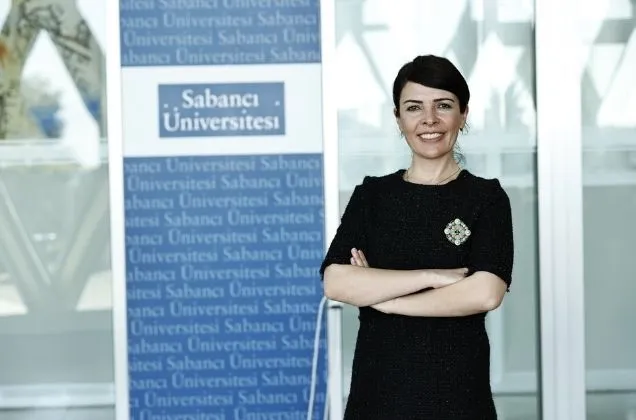
In the age of artificial intelligence, geopolitical tensions, and climate change, the question “Quo vadis, world order?” is more important than ever. Because almost everyone today is wondering in which direction the world order is evolving or what its future will be. It is impossible to make a definitive statement under current conditions. We asked this question to Senem Aydın-Düzgit, Director of the Istanbul Policy Center and Professor of International Relations at the Faculty of Arts and Social Sciences, Sabancı University.
In summary, Aydın-Düzgit points out that the unipolar world order is coming to an end and that we are in the midst of a transition process.

During the Cold War, the world was largely bipolar: the United States and the Soviet Union. After the collapse of the Soviet Union, for about thirty years, the world was described as a “unipolar world” due to the clear dominance of the US. Today, this picture has undergone a radical change and is much more complex than before.
Responding to the question, "Where are we going?", Aydın-Düzgit says, "We are going through a period dominated by disorder," and briefly assesses the current state of the world as follows: "We cannot definitively say that we are evolving towards a US-China bipolarity or a multipolar order as a result of the weakening of American hegemony. Uncertainty has increased significantly, especially since Trump came to power. Other actors have begun to assume important roles in world politics, such as Türkiye, India, and Brazil. Meanwhile, the technological competitiveness of European countries is decreasing internationally. The US is still attracting intellectual talent, but Trump's policies have begun to undermine this process as well."
Can Europe protect liberal democracy?
Aydın-Düzgit points out that Europe is using its leverage as a large market to increase its competitiveness by prioritizing industrial policies, noting that there are serious initiatives in this direction in European countries.
According to Aydın-Düzgit, Europe still maintains its respected position on issues such as individual freedoms, the rule of law, and gender equality. However, she says that whether it can protect liberal democracy is debatable, and that uncertainty is increasing, especially in these days when the influence of rising right-wing parties is felt more strongly.
She underlines that increasing inequalities stem from neoliberalism, that centrist parties are failing to produce policies to address inequality, and that fascism has emerged as a serious threat.
What is the state of globalization?
“Increased protectionist measures are hindering the globalization process,” said Aydın-Düzgit, adding, “The insistence on establishing hegemony actually fuels protective reflexes. In the period after Trump’s return, globalization didn’t completely stop; however, it is changing form. If Trump loses power, could globalization resume in its main outlines? We shall see.”
The classic globalization model of the 1990s and 2000s, that is, the system where capital, goods, and production circulated as freely as possible, had already begun to change shape in recent years. According to Aydın-Düzgit, Trump’s policies further strengthened this trend. Although world trade still continues on a very large scale, countries are now more selective about “who they trade with.” Globalization is becoming increasingly politicized and regionalized.
Is there still hope in Türkiye's EU negotiations?
Aydın-Düzgit speaks definitively on this matter: “In my opinion, Türkiye's chance of joining the EU is not even a possibility. In recent years, with the rule of law being disregarded, reviving the negotiation process has become impossible; moreover, the negotiations have been effectively frozen for a long time; no new negotiation chapters are being opened, and the current process is not progressing.” Aydın-Düzgit, stating that “while the delays in the process at the beginning of Türkiye's candidacy were mostly the fault of the EU, in recent years, due to the almost complete disregard for the rule of law, membership is no longer even discussed,” concludes, “In short, the countries most prominent on the EU's enlargement agenda today are the Western Balkan countries, Ukraine, and Moldova.”
Türkiye rediscovers the importance of NATO
The next NATO summit to be held in Türkiye will take place in Ankara on July 7-8, 2026. This will be the second NATO leaders' summit hosted by Türkiye; the first was held in Istanbul in 2004. With the summit approaching, we asked Aydın-Düzgit about her views on the future of NATO and its importance to us. Here is her answer: “Türkiye has recently rediscovered the importance of NATO, especially during the Iran-US clashes. This importance became evident when several Iranian ballistic missiles approached Turkish airspace and were intercepted by NATO’s integrated air and missile defense system.”
“In fact, the future of NATO is uncertain. European countries cannot imagine defense without NATO at this stage. Likewise, although Russia has not maintained its former power, it is still seen as the biggest threat to Europe. However, it remains unclear whether the US will continue to shoulder the burden of NATO. Trump cut off support for Ukraine, but some European countries, primarily Germany, have taken on this burden. European countries' defense budgets are increasing significantly. Within the next 10 years, Europe may no longer need the NATO umbrella, but currently, a NATO without the US is a frightening scenario for Europe.”
“What will be discussed at the summit? Burden sharing between the US and its European allies, enhancing Europe’s defense capabilities, and NATO-EU cooperation are among the topics the leaders will address.”
Migration cannot and should not be prevented!
Aydın-Düzgit believes that migration will increase in the coming period. The most important reason for the expected increase in migration is the climate crisis. Risks such as hunger, drought, and food insecurity have become urgent due to climate change. Moreover, according to Aydın-Düzgit, who says that "migration is an economic force in the West," migration is of vital importance. This is because: "Europe is facing a serious demographic collapse. Under these conditions, there is a great need for young labor. Even automation may not be able to meet this need. Closing borders to a large extent would be a huge mistake."
Aydın-Düzgit also draws attention to the United Nations Climate Change Conference of Parties (COP31), planned to be held in Antalya between November 9 and 20. She states that Sabancı University will actively participate in the conference with its various components, primarily the Istanbul Policy Center.
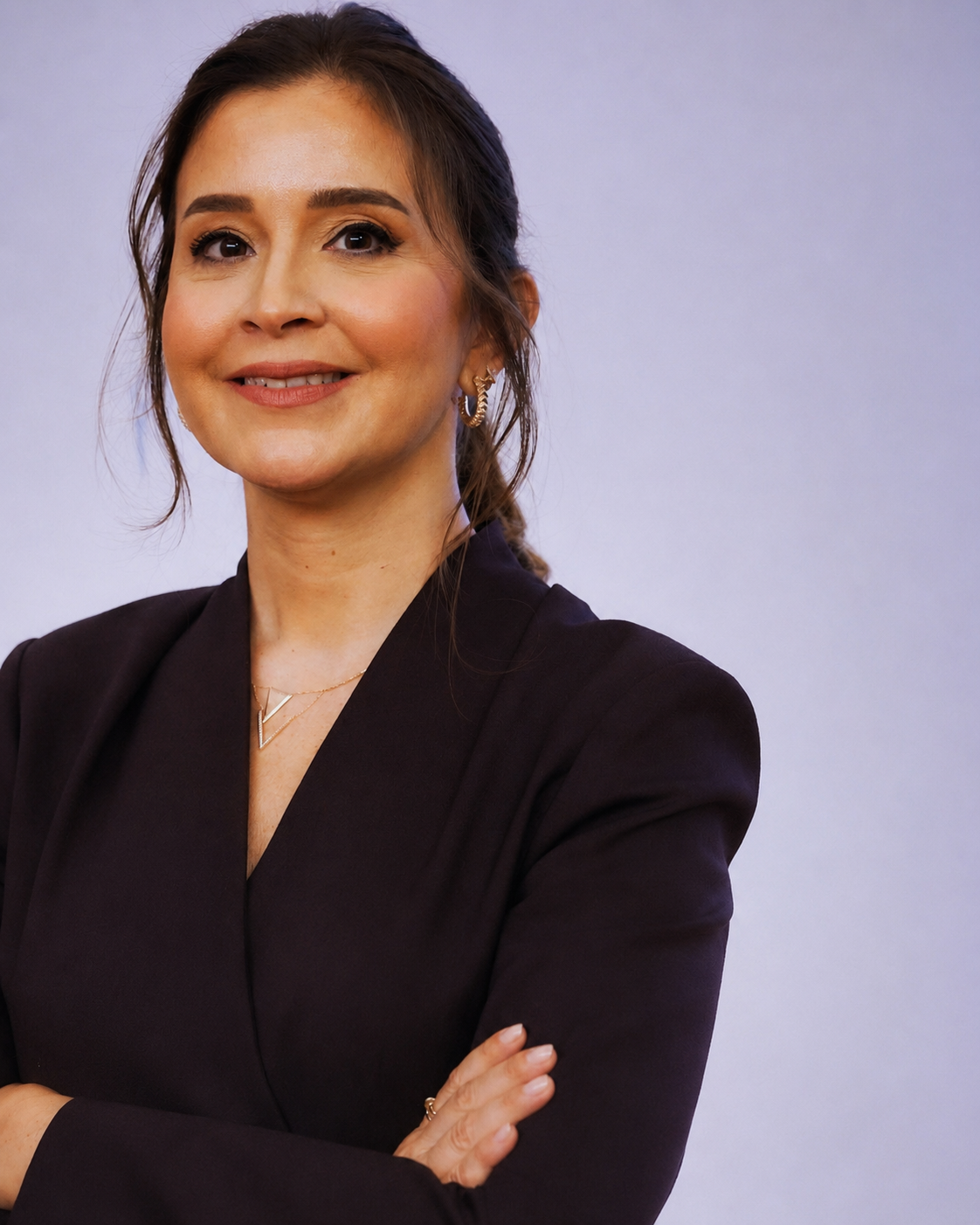
Who is Prof. Dr. Senem Aydın-Düzgit?
Senem Aydın-Düzgit is the Director of the Istanbul Policy Center and a Professor of International Relations at the Faculty of Arts and Social Sciences, Sabancı University. She is also a non-resident fellow at theInstitute for European Policy at Bocconi University. In 2024-2025, she was based at the Harvard Kennedy School as the Pierre Keller Visiting Professor of Public Policy, and in 2023-2024, she was a Richard von Weizsacker Fellow at the Robert Bosch Academy in Berlin.
Aydın-Düzgit's main research focuses on identity, history, and discourse in the study of international politics, with an empirical focus on European and Turkish foreign policies; and more recently, the nexus between domestic and foreign policies of middle powers in the changing international order. In addition, Aydın-Düzgit has conducted research and published in the field of international democracy support, both inthe context of European foreign policy through enlargement and Turkish foreign policy.
She holds a PhD from Vrije Universiteit Brussels, an MSc from the London School of Economics and Political Science, and a BA from Boğaziçi University.
Aydın-Düzgit is a member of the European Council on Foreign Relations (ECFR), a fellow of the Young Academy of Europe (YAE), and a member of the academic advisory board of the Europaische Politik Institute. She also co-edits the Future of Europe book series (Springer) and serves on the editorial boards of the Journal of European Integration, Journal of Language and Politics, South European Society and Politics, and New Perspectives on Turkey. In 2014, she was awarded the Young Scientist Award by the Turkish Academy of Sciences (BAGEP).
Sources:
https://perspektif.online/turkiye-ve-avrupa-bilindik-hikayenin-belirsiz-gelecegi/
https://wwwsabanciuniv.academia.edu/SenemAydinD%C3%BCzgit/Book%20Chapters
https://www.youtube.com/watch?v=CHDUPtGCFZk